
What are Eco-Friendly Washed Denim Jeans?
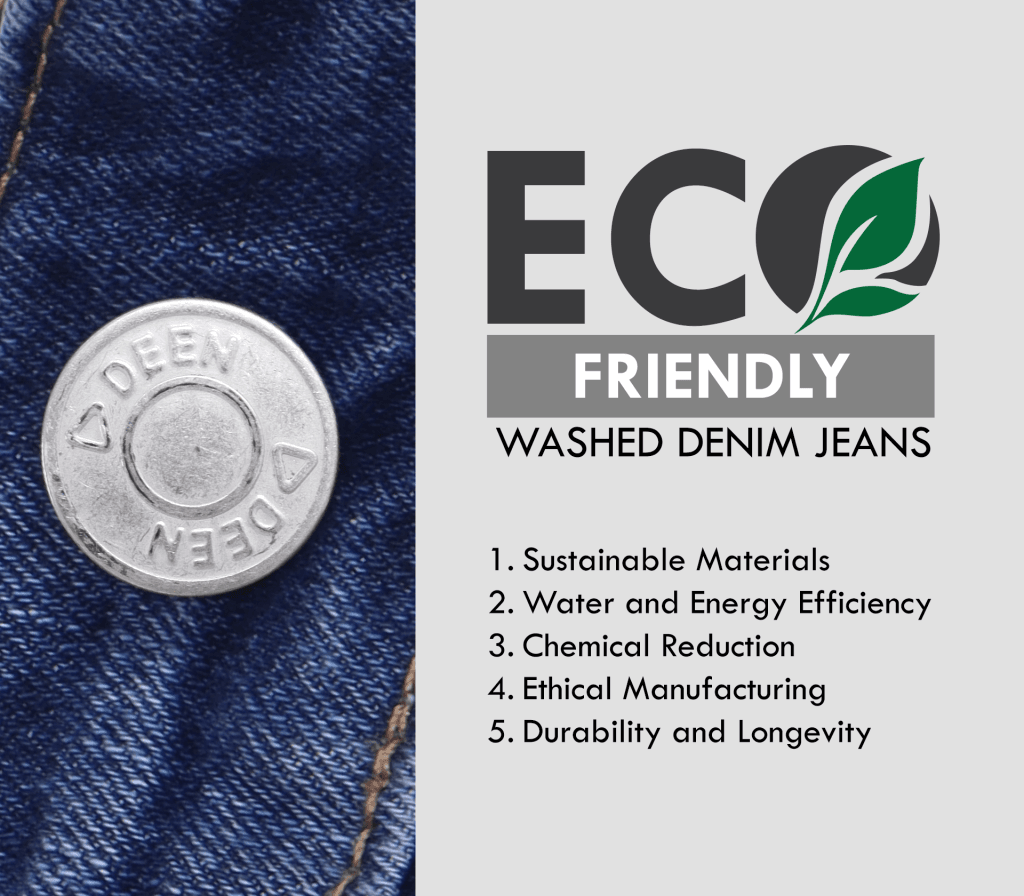
Eco-friendly washed denim jeans refer to denim products manufactured with a focus on reducing environmental impact throughout their production lifecycle.
Here are key aspects that define our eco-friendly washed denim jeans:
𝗦𝘂𝘀𝘁𝗮𝗶𝗻𝗮𝗯𝗹𝗲 𝗠𝗮𝘁𝗲𝗿𝗶𝗮𝗹𝘀
These are often made from organic cotton, organic hemp, Lyocell, and other sustainable fibers. These are grown without synthetic fertilizers or pesticides, which is good for the soil and saves water.
𝗪𝗮𝘁𝗲𝗿 𝗮𝗻𝗱 𝗘𝗻𝗲𝗿𝗴𝘆 𝗘𝗳𝗳𝗶𝗰𝗶𝗲𝗻𝗰𝘆
Eco-friendly denim production uses less water and energy. This includes technologies like laser finishing and ozone washing which are better than traditional processes that use a lot of water.
𝗖𝗵𝗲𝗺𝗶𝗰𝗮𝗹 𝗥𝗲𝗱𝘂𝗰𝘁𝗶𝗼𝗻
We have employed eco-friendly dyeing and finishing processes that minimize the use of harmful chemicals, replacing them with safer alternatives that have less impact on the environment and human health.
𝗘𝘁𝗵𝗶𝗰𝗮𝗹 𝗠𝗮𝗻𝘂𝗳𝗮𝗰𝘁𝘂𝗿𝗶𝗻𝗴
We have prioritized fair labor practices and ethical sourcing, ensuring that workers involved in the production of denim jeans are treated fairly and work under safe conditions.
𝗗𝘂𝗿𝗮𝗯𝗶𝗹𝗶𝘁𝘆 𝗮𝗻𝗱 𝗟𝗼𝗻𝗴𝗲𝘃𝗶𝘁𝘆
Eco-friendly denim jeans are often designed to be durable and long-lasting. This reduces the frequency of replacement and overall environmental footprint.